Obon is the mid-August observance when families return to their home towns to honour their ancestors, and it produces one of the heaviest domestic travel weeks of the Japanese year. What catches American visitors out is that it is not a public holiday at all — the calendar shows ordinary working days while the country moves. Here is what changes, and what to do about it.
When Obon falls
Obon is observed around 13 to 16 August across most of Japan, though the observance is not a national holiday and the dates are not fixed by law. Some regions, including parts of Tokyo, keep it in mid-July instead, following the older calendar. For a visitor, the mid-August window is the one that matters, because that is when the bulk of the country travels.
Why a non-holiday empties the cities
Most Japanese companies close for several days around Obon even though the state does not require it, which produces the effect of a national holiday without one appearing on any calendar. Because the tradition is about returning to a family home, the movement runs out of the big cities and into the provinces — the opposite direction to a tourist week.
What actually closes
Closures during Obon fall on the small and family-run layer of Japanese business: independent restaurants, neighbourhood shops, small workshops, and family-owned inns whose owners are themselves observing. Larger museums, department stores, chain restaurants and the major temples and shrines generally stay open.
The pattern is inconsistent enough that it is worth checking specific places rather than assuming. A restaurant you were looking forward to may simply be shut for four days with a handwritten note on the door, and that is normal rather than a sign of anything going wrong.
What it does to travel
Obon, across roughly 13 to 16 August, puts enormous pressure on long-distance transport in both directions: out of the cities at the start, back into them at the end. Reserved seats on the fast trains sell out on the main corridors, domestic flights fill, and expressways congest badly. Accommodation tightens most in the provincial towns and hot-spring resorts that are quiet the rest of the year.
Where the pressure is lighter
Central Tokyo and central Kyoto are, unusually, somewhat calmer during Obon than in the weeks either side, because a substantial share of their residents has left. The cities do not empty — inbound visitors are still there — but the domestic layer thins out. If you are staying put in a big city, Obon is more manageable than its reputation suggests.
The difficulty lands on anyone moving between places in the two or three days at each end of the observance. That is the window to avoid for long journeys, rather than the whole period.
What you can see during the observance
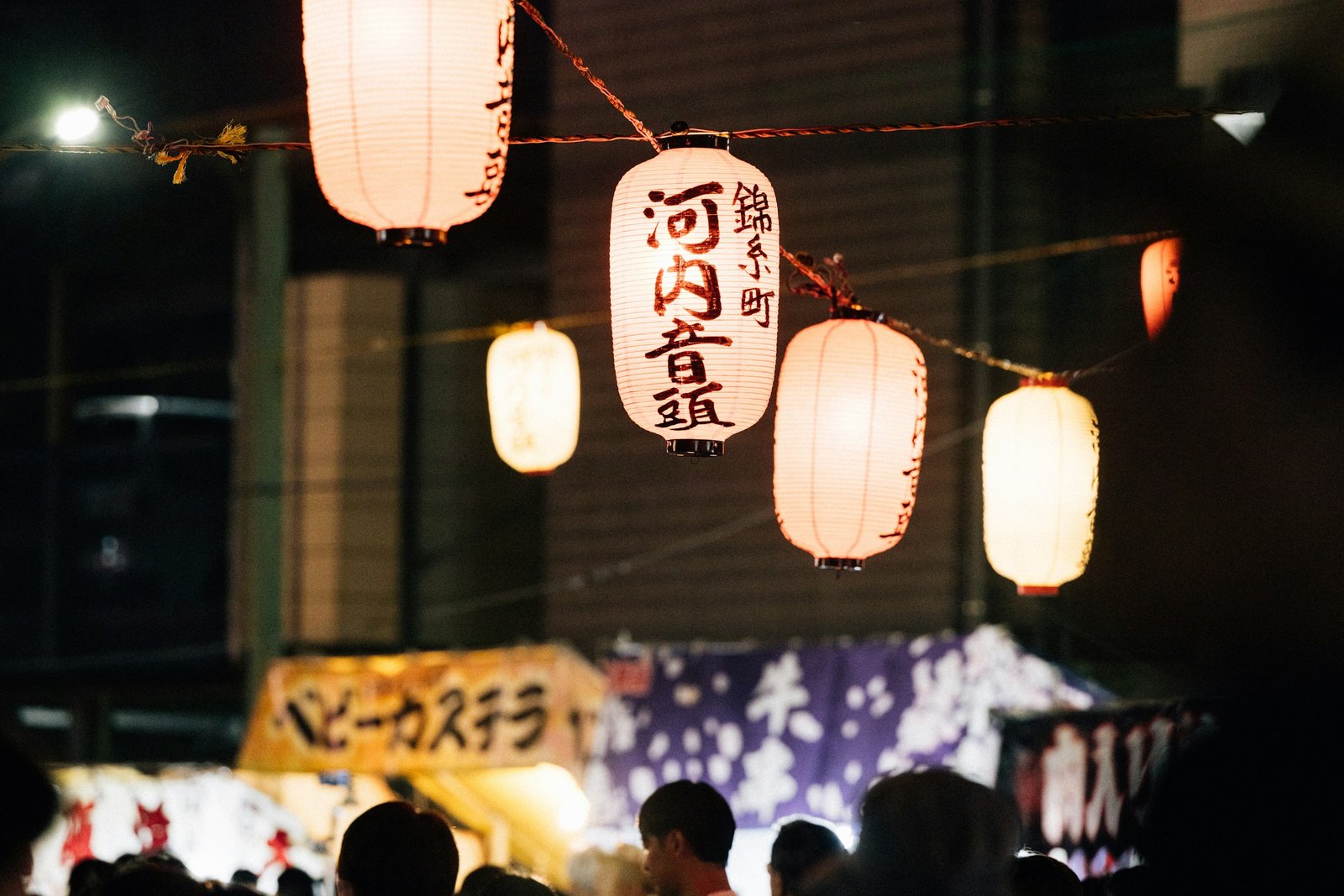
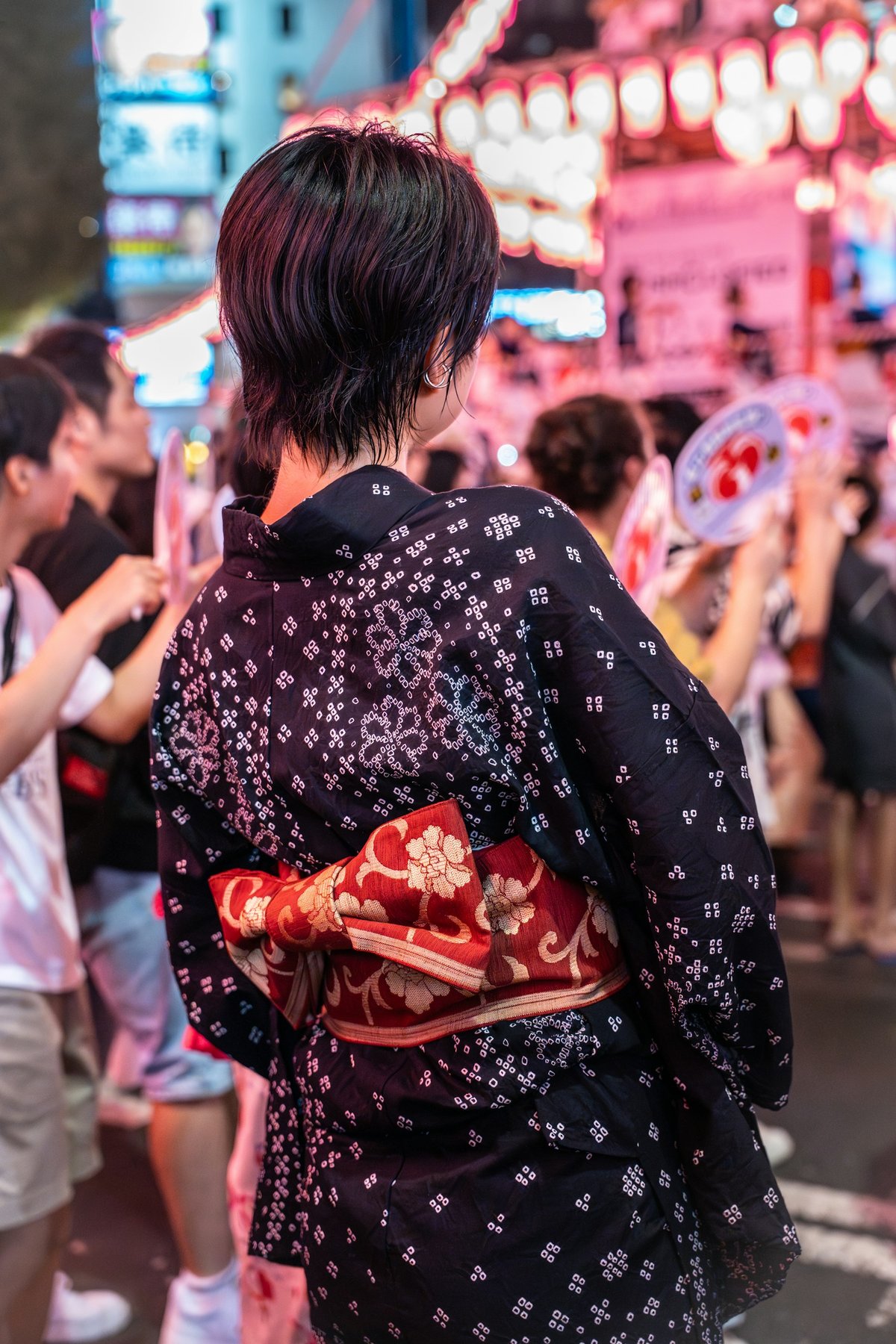
Obon is a religious and family occasion rather than a spectacle staged for visitors, and most of it happens privately — graves tended, household altars prepared, relatives gathered. What is public are the neighbourhood dances held on summer evenings across the country, open to anyone who wants to join the circle, and the lanterns set out to guide ancestors home and away again. Encountering one is a matter of being in a neighbourhood at the right hour rather than buying a ticket.
The other August problem
Obon sits inside Japan's hardest month for weather. August highs in Tokyo and Kyoto run around 33 to 35C with high humidity, and Kyoto's basin geography makes it feel worse than the number suggests. Heat is a genuine constraint on how much walking an itinerary can carry, not merely a comfort note — a plan that works in April will not survive August unmodified.
August is also the peak of the typhoon season, which can remove a travel day at short notice. Neither is a reason to cancel a trip that has to happen in August, but both are reasons to build a lighter plan with indoor options, early starts and long afternoon breaks.
The July observance, and why it confuses people
Parts of Japan, including some Tokyo districts, observe Obon in mid-July rather than mid-August, following the older lunar reckoning. The result is that a visitor can encounter Obon decorations and observances in July in one neighbourhood and find nothing unusual a few train stops away.
The July observance does not produce the national travel surge, which is what makes the August window the one that matters for planning. If you are in Tokyo in mid-July and notice lanterns going up, that is the local calendar rather than a sign that the country is about to move.
Reading the direction of the crowd
Obon travel runs out of Tokyo, Osaka and the other major cities and into the provinces, which is the reverse of almost every other busy period and the reason the usual advice does not apply cleanly. A tourist week concentrates people in Tokyo and Kyoto; Obon disperses residents from them toward home towns, hot-spring resorts and rural districts.
For a visitor, that inversion is worth using rather than fighting. A city-based few days across the observance can be easier than the weeks either side, while a plan built around small provincial towns runs straight into the heaviest demand of the year for exactly the kind of accommodation those towns have least of.
Travelling through it deliberately
Obon, in the middle four days of August, is workable if you treat it as a fixed feature of the map rather than a surprise. Book long-distance travel and rooms well ahead, avoid moving cities in the peak days at either end, and expect small restaurants to be closed.
Choosing when to come is one of the decisions that quietly reshapes everything else about a first trip, which the complete Japan trip guide works through in order.
If your dates are flexible and August is not fixed, avoid the few days right around Obon itself — roughly the 10th to the 19th — and either half of the month works; September is easier than all of August once the worst of the heat begins to break.