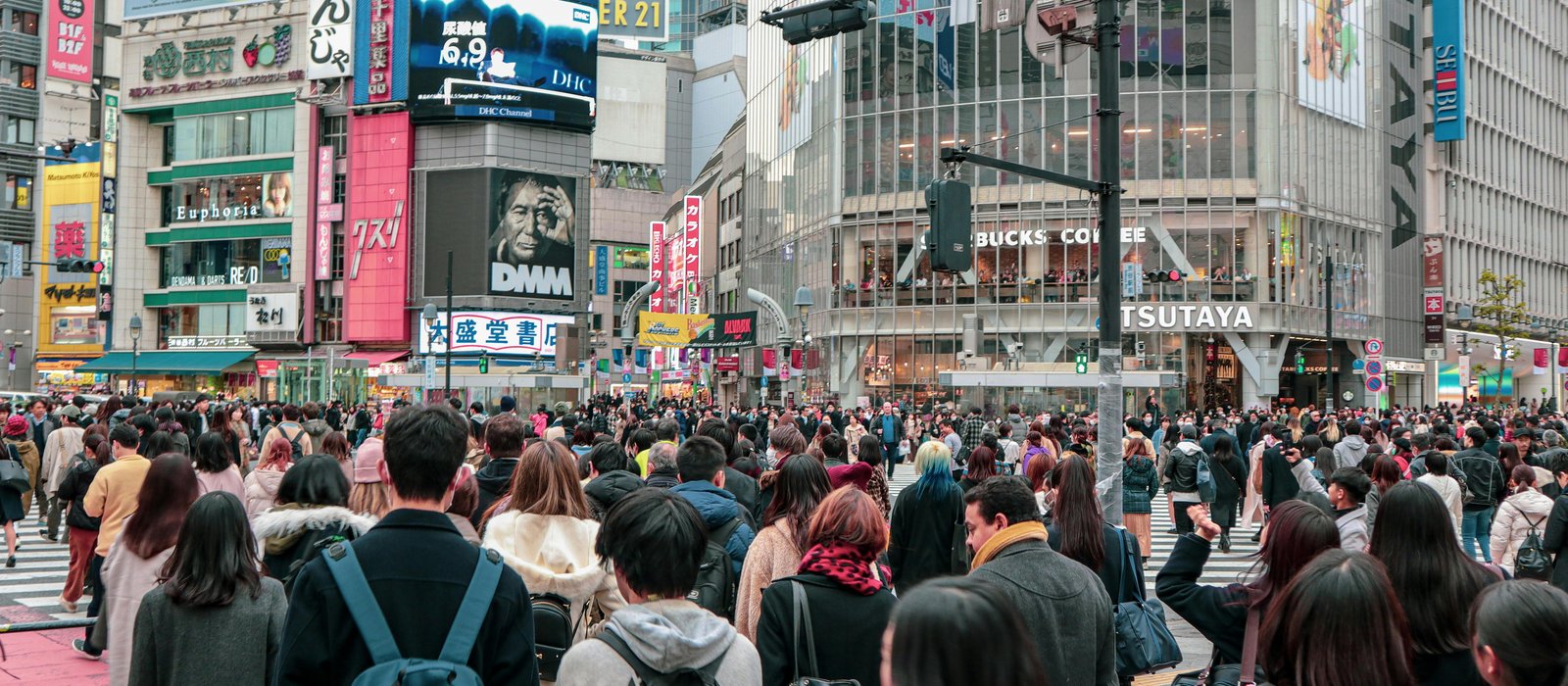
Shibuya and Harajuku sit side by side on Tokyo's west side and together form the city's youthful, fashion-forward heart. They're easy to combine into a single day of wandering, and the contrast between the two — electric energy giving way to boutique calm giving way to a forest shrine — is one of the best single-day snapshots of what makes Tokyo interesting. Here's what to see in each.
Shibuya
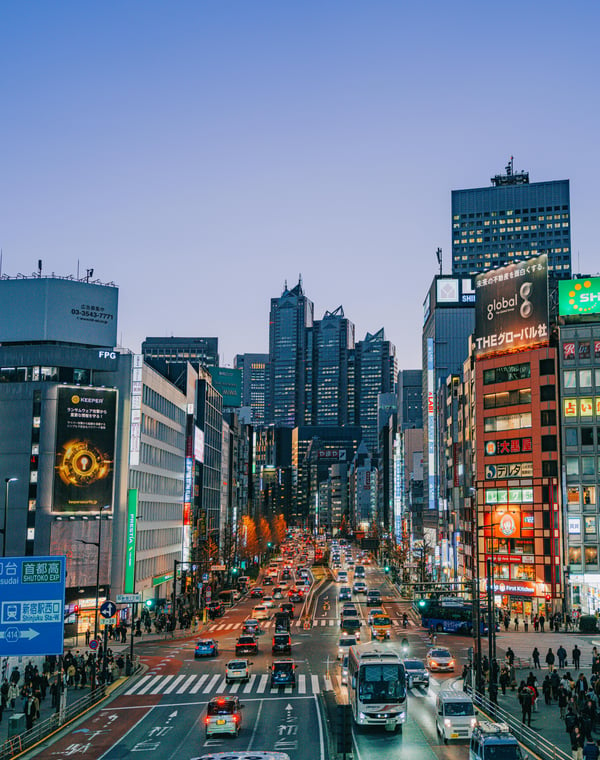
Shibuya is anchored by the world-famous Shibuya Crossing, the scramble intersection where up to 3,000 people surge across in every direction at once when the lights change. Walk it once at street level, then watch the spectacle from above — the Shibuya Sky observation deck and the window seats at the Starbucks overlooking the crossing are both popular vantage points, though Sky charges admission and the Starbucks is first-come, first-served. Nearby is the Hachiko statue, a beloved meeting spot named for a dog famous for waiting at the station daily for its owner even after his death — it's tiny in person and often mobbed, but worth the two minutes.
What to do in Shibuya
- Experience the crossing from street level and from above.
- Shop the youth-fashion department stores like Shibuya 109, the district's iconic multi-floor fashion mall.
- Explore the side streets around Center Gai and Miyashita Park for cafes, restaurants, and bars.
- Take in a city view from Shibuya Sky or one of the newer rooftop observation decks.
Harajuku
A short walk or one train stop from Shibuya, Harajuku is the center of Tokyo's youth and street fashion. Takeshita Street is its famously colorful, crowded pedestrian lane packed with quirky shops, crepe stands, and whatever trend is peaking that season — it's genuinely narrow, so expect shoulder-to-shoulder crowds on weekends. Just beyond, Omotesando offers a completely different register: a wide, tree-lined boulevard of designer boutiques and architecture from name-brand international architects, more Champs-Élysées than teen fashion strip — flagship stores from Prada, Dior, and a rotating cast of Japanese and international designers occupy buildings by well-known architects, and even if shopping isn't the point, the street itself is worth a slow walk for the architecture alone. The side alley of Ura-Harajuku (behind the main street) is where independent boutiques and vintage shops cluster, a better bet than Takeshita Street itself if crowds aren't your thing.
Meiji Shrine
The contrast that makes this area special: right beside busy Harajuku lies Meiji Shrine, set in a tranquil forest of some 120,000 trees donated from across Japan when it was built. The wooded approach and grand torii gates create one of the most peaceful spots in central Tokyo — a perfect counterpoint to the surrounding bustle. Don't skip it. Adjacent Yoyogi Park is worth a wander too, especially on a weekend when street performers, musicians, and picnicking locals turn it into one of the best people-watching spots in the city.
How to combine them
A natural plan: start with the calm of Meiji Shrine and Yoyogi Park in the morning before the crowds build, wander Harajuku (Takeshita Street and Omotesando), then end in Shibuya for the crossing and an evening out — dinner in the side streets, then the crossing again after dark, when the neon signage makes it a genuinely different sight than the daytime version. It's an easy, walkable progression from serene to electric, and showcases Tokyo's range in a single day. The whole loop is also a reasonable base for your stay: Shibuya in particular is well-connected and worth checking for a hotel if you want nightlife and transit links over old-Tokyo atmosphere. (This article contains affiliate links — if you book through them we earn a small commission at no extra cost to you.)
Practical tips
- Weekends are extremely crowded in Harajuku and at the crossing — go early or on a weekday if you can, especially for photos.
- It's all walkable, but the JR Yamanote line connects the stations if you tire.
- Great area for people-watching and street food (just don't eat while walking) — Takeshita Street's rainbow cotton candy and crepe stands are the classic photo-ops.
- Meiji Shrine is free to enter, though the inner garden carries a small fee.
Where to eat
Shibuya's side streets hide far better food than the main crossing area suggests — Nonbei Yokocho ("Drunkard's Alley"), a tiny cluster of postwar-era bars and yakitori counters tucked under the train tracks near Shibuya Station, is worth seeking out for something more local than the chain restaurants facing the crossing. Harajuku leans casual and photogenic: beyond the Takeshita Street crepe stands, the side streets around Cat Street (between Harajuku and Omotesando) have a good concentration of cafes if you want to sit down rather than eat on the move — remember, eating while walking is generally frowned on in Japan, so a bench in Yoyogi Park or a cafe seat is the better call than strolling with a crepe in hand.