Getting to Japan from the US is more straightforward than the distance suggests. Multiple nonstop routes connect major American hubs to Tokyo and Osaka, served by both US and Japanese carriers, and the flight — while long — is very manageable, especially if you plan the timing to your advantage. Here's what to know about routes, flight times, costs, and booking smart.
Which airports you'll fly into
Japan has three main international gateways for US travelers: Tokyo Haneda (HND), Tokyo Narita (NRT), and Osaka Kansai (KIX). Haneda sits much closer to central Tokyo than Narita, so if you're starting in Tokyo and have the choice, flying into Haneda usually saves you time and money on the airport transfer. Kansai (KIX) is the natural choice if you're beginning your trip in Kyoto or Osaka, letting you skip a backtrack from Tokyo. A fourth option worth knowing about: some itineraries route through a connecting hub like Seoul (ICN) or Taipei (TPE) on a partner or budget carrier, which can undercut nonstop fares by a meaningful margin in exchange for a longer travel day — worth pricing out if your dates are flexible and you don't mind an extra stop.
Nonstop routes from the US
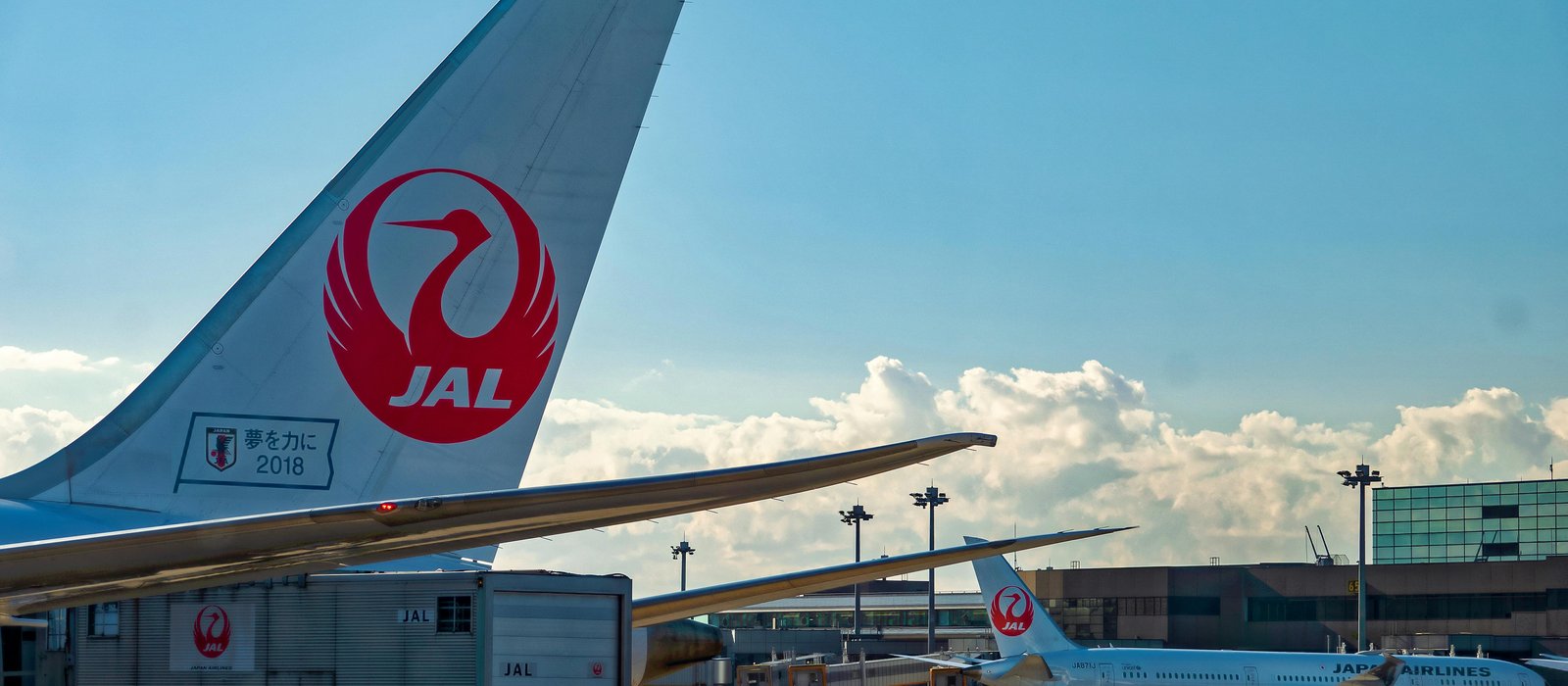
You can fly nonstop to Japan from a wide range of US cities, including Los Angeles, San Francisco, Seattle, Portland, Las Vegas, Chicago, Detroit, Minneapolis, Houston, Dallas, Atlanta, New York/Newark, Boston, and Washington Dulles, among others. The two Japanese carriers — Japan Airlines (JAL) and ANA, both consistently top-rated — fly these routes alongside the major US airlines (United, American, Delta), so there's usually solid competition on price and schedule. Smaller or inland cities typically connect through a West Coast hub.
How long is the flight?
Flight time depends heavily on which coast you leave from:
- West Coast (LAX, SFO, SEA): roughly 11–12 hours nonstop.
- East Coast (JFK/EWR, IAD, BOS): roughly 13–14 hours nonstop.
- Central hubs (ORD, DFW): somewhere in between.
Returning to the US is often a bit longer due to headwinds. Japan is well ahead of every US time zone (it's a day "ahead" across the Pacific), so the time change is significant — build in a buffer day at the start of your trip to shake off the jet lag before diving into sightseeing.
Making the long flight more bearable
A few practical choices matter more on an 11+ hour flight than a domestic one. An aisle seat trades window views for the freedom to get up without climbing over a stranger, which most people prefer on an overnight leg. If your budget allows it, premium economy on the Japanese carriers is a genuinely different experience from US carriers' version — more recline, a footrest, and better food — and can be worth pricing against a coach fare with a paid upgrade. Set your watch to Japan time as soon as you board, sleep on the segment of the flight that aligns with Japan nighttime, and skip the alcohol; it makes jet lag meaningfully worse on a flight this long.
What flights cost
Fares to Japan swing a lot by season, route, and how far ahead you book. Cherry blossom season (late March–April) and the fall foliage months (October–November) tend to be the most expensive and competitive, so they reward booking early — often several months out, realistically 4 to 6 months for the best fares in those windows versus 2 to 3 for shoulder-season travel. Rather than quote a figure that goes stale, it's best to compare live fares across a range of dates; a flexible-date search quickly reveals which travel weeks are cheapest, and shoulder seasons or winter (outside the holidays) often deliver the best deals. This is a good place to run a quick flight search from the US and watch a few dates before committing. (This article contains affiliate links — if you book through them we earn a small commission at no extra cost to you.)
Booking tips
Be flexible on your gateway
If you're not locked into Tokyo, pricing Haneda, Narita, and Kansai separately can surface a meaningfully cheaper fare. You can even fly into one city and out of another — an "open-jaw" ticket — which is ideal if your itinerary runs Tokyo to Kyoto, since you can depart from Kansai instead of backtracking to Tokyo. This often costs little or no more than a round trip and saves a travel day, and it's usually the single biggest lever on how well the rest of your route flows — exactly how many cities to string together and in what order is its own decision worth getting right before you lock in flights, which the complete Japan route guide walks through in more depth.
Watch the peak windows
Aim to book well ahead for late March–April and October–November. Try to avoid Japan's domestic holiday crunches like Golden Week (late April–early May), Obon (mid-August), and New Year, which spike both airfare and crowds.
Consider the arrival time
An afternoon or evening arrival makes it easiest to head straight to your hotel and sleep, which helps reset your body clock. A morning arrival means a long first day fighting to stay awake — doable, but plan something light, and if you do land early, resist the urge to nap for more than an hour or two; a long daytime nap on day one is what usually turns a one-day adjustment into three.
Mind your gateway vs your route
Match your arrival and departure airports to your itinerary's shape — into Tokyo, out of Kansai (or vice versa) for the classic Tokyo–Kyoto trip — to avoid wasting time backtracking.
Bottom line
Nonstop service from both US coasts makes Japan an easy long-haul to plan. Pick your gateway based on where your trip begins, search flexible dates to catch a good fare, consider an open-jaw ticket to save backtracking, and give yourself an easy first day on the ground to beat the jet lag. With your flights set, the next questions are usually entry requirements and what to expect on arrival.