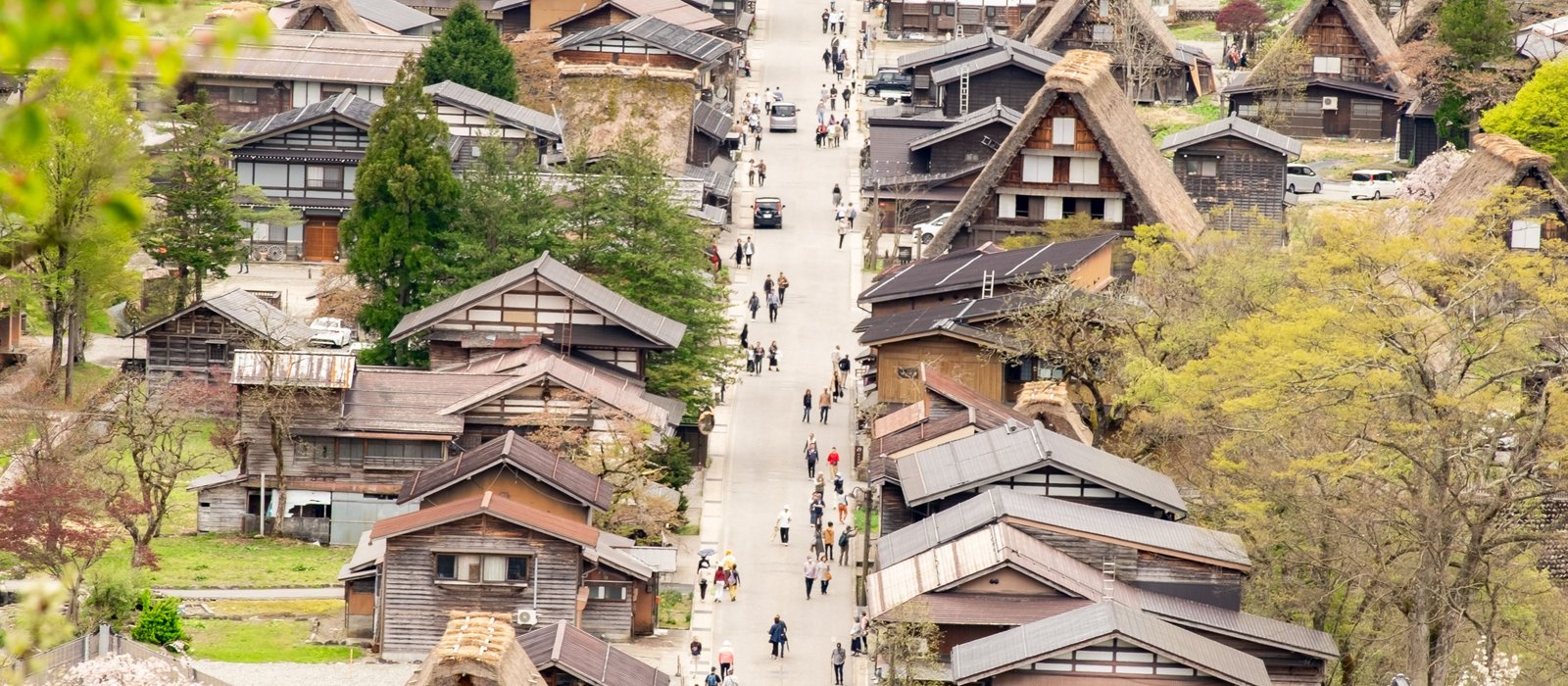
Two weeks in Japan is a luxury that lets you go well beyond the classic Tokyo–Kyoto core — adding Hiroshima and Miyajima, more day trips, an onsen town, and time to slow down and wander. Here's a comprehensive 14-day itinerary that still keeps a sane pace.
The shape of the trip
Fourteen days supports three or four bases moving roughly west across the country: Tokyo, the Kansai region (Kyoto/Osaka), and Hiroshima, plus day trips and an onsen night woven in along the way. Fly open-jaw if you can — into Tokyo, out of Osaka or Fukuoka — so your route is a steady progression west rather than a there-and-back trip that revisits Tokyo at the very end. The Shinkansen makes the whole west-to-east spread easy and comfortable, turning what would be a genuinely long haul by car into a series of relaxed two-to-three-hour hops.
Days 1–4: Tokyo and Hakone
Three days in Tokyo covers the icons (Senso-ji and old Asakusa, the Shibuya Crossing, teamLab, Tokyo Skytree), plus time to wander a neighborhood or two at a slower pace. Add a Hakone day trip or overnight for hot springs and Mt Fuji views on the scenic loop of mountain railway, ropeway, and lake cruise. See our 7-day itinerary for a fuller day-by-day breakdown of this stretch.
Days 5–6: Around Tokyo
With extra time, add another day trip — Nikko for spectacular UNESCO forest shrines, or Kamakura for the seaside Great Buddha — and a slower day to explore a Tokyo neighborhood in real depth or revisit a favorite from earlier in the stay. This is where a two-week trip starts to feel meaningfully different from a rushed first week: you have room to double back to what you loved.
Day 7: Travel to Kyoto
Ride the Shinkansen to Kyoto. Spend the afternoon easing in — Fushimi Inari's torii tunnels if you want an early highlight, or a gentler wander through downtown and Nishiki Market if you'd rather start slow.
Days 8–10: Kyoto and Nara
Two full days in Kyoto, grouped by area to minimize crosstown travel: eastern Higashiyama and Gion one day, western Arashiyama and Kinkaku-ji the next. Add a day trip to Nara for Todai-ji's giant Buddha and the park's free-roaming deer. Add an evening tea experience or a quieter temple like Ryoan-ji's rock garden if you have appetite for more.
Day 11: Osaka
A day (or overnight) in Osaka — Osaka Castle by day and a night of street food in neon-lit Dotonbori. It's an easy, quick hop from Kyoto, close enough that some travelers even day-trip it without changing hotels.
Days 12–13: Hiroshima and Miyajima
Shinkansen west to Hiroshima. Spend a day at the deeply moving Peace Memorial Park and Museum, and a day on nearby Miyajima island to see the famous torii gate (check the tide table — it only "floats" at high tide), hike or ride the ropeway up Mt Misen, and meet yet more friendly deer roaming the island.
Day 14: Departure
Travel back toward your departure airport, or fly out of Kansai if your routing allows it, with a final morning free for anything you missed. If you based cleverly and flew open-jaw, you've looped steadily west across the country without ever doubling back far — exactly the kind of routing choice the complete Japan route guide walks through for trips with this many moving pieces.
Alternative add-ons
With two weeks, you can swap in other regions depending on your interests:
- Koyasan — a sacred mountain with temple-lodging (shukubo) and morning prayers, near Osaka.
- Takayama and the Japan Alps — traditional towns and mountain scenery.
- Kanazawa — a refined city with one of Japan's finest gardens.
- An onsen town like Kinosaki for a relaxing night or two.
Tips
- This is the itinerary where a JR Pass is worth pricing carefully — a 14-day pass runs around ¥80,000, while individual tickets for Tokyo–Kyoto–Hiroshima and back add up to roughly ¥45,000–70,000 depending on exactly how many legs you ride, so the two options often land close together rather than one clearly beating the other. The single biggest lever is whether you fly open-jaw (into Tokyo, out of Kansai): skipping the return leg back to Tokyo removes a big chunk of point-to-point cost and usually tips the math against the pass. Price both for your exact route before deciding.
- Build in slower days — two weeks is long enough that constant sightseeing burns out; leave room to wander.
- Use luggage forwarding (takkyubin) between cities so you're not hauling bags on every train.
- Add at least one ryokan/onsen night for a traditional experience.
Bottom line
Two weeks lets you experience Japan comprehensively — the two great cities, the best day trips, Osaka's food, and the meaningful detour to Hiroshima and Miyajima — at a pace that still leaves room to breathe. It's the trip that turns a first-timer into a lifelong returnee.


